Adopting Pip, Peggy and PomPom: what three guinea pigs need
Pip, Peggy and PomPom are three one-year-old guinea pigs at Blue Cross's Burford rehoming centre, and they need an indoor home together. Here is what the profiles say, and what three guinea pigs need.
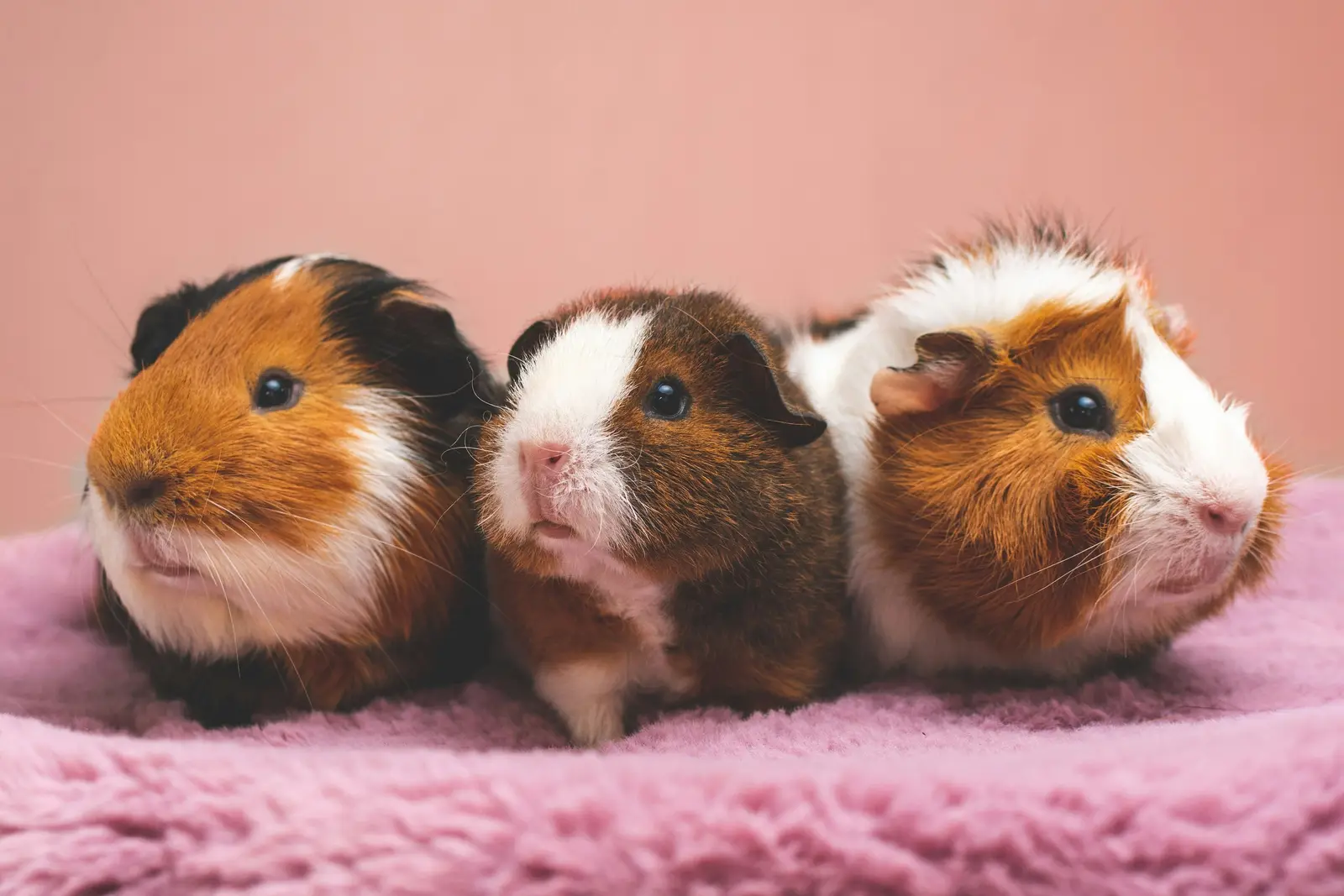
Pip, Peggy and PomPom are three one-year-old guinea pigs at Blue Cross's Burford rehoming centre, and they are looking for an indoor home together. All three are female, all three came from a family household, and the centre is rehoming them as a set. Peggy is the bold one, Pip and PomPom are the cautious two, and their profile says both will sit on a lap for a gentle stroke once they feel safe.
What the profile says about the three
The Blue Cross listing repeats the same description across the three individual pages staff wrote for each guinea pig: one-year-olds used to the hustle and bustle of family life, and suitable for children of any age. That age rating comes from the team's own assessment. Ask on the phone what it was based on, meaning whether the girls were handled by children in their last home and how they reacted to it.
The three have distinct temperaments. Peggy is the confident leader, always first to investigate something new. Pip and PomPom hang back, taking their time before deciding a thing is safe, and both enjoy a lap and a gentle fuss once they have stopped worrying. In practice you get one guinea pig who meets you at the front of the pen and two who need a few weeks of quiet, repeated handling before they stop bolting when you walk in.
Why the three go as a set
Guinea pigs are herd animals, and a lone one lives in a state of low-level stress. The centre wants one home for all three, and a rehoming conversation that starts with splitting them should be a short one.
Their profile also says they can join other female guinea pigs, or a neutered male. Two routes follow from that. If you have no guinea pigs now, the trio is already a group and you are adding people. If you keep sows, you would be building a bigger herd, and that means introductions on neutral ground with room for each pig to move away from the others. Guinea pigs settle their hierarchy with a lot of noise, some chasing and the occasional tuft of fur. Most of it looks worse than it is, and all of it goes better in a space that smells of nobody.
One condition is fixed. A boar must be neutered, the operation must be healed, and most rescues want your vet to confirm it. Ask Blue Cross what proof they need before you plan any introductions.
An indoor home for three guinea pigs
The listing asks for an indoor home, which matches how guinea pigs are kept in the UK now. A garden hutch leaves three animals exposed to weather and turns the daily check for droppings and weight loss into a job done in the rain, which is how it stops happening.
Three guinea pigs need more floor space than most people expect. Go for a solid floor, a hide for each pig, and enough run for them to move a few strides without bumping into a cage mate. Guinea pigs stay on the ground, so the space has to be one level. A spare room or a large pen in a family room works. A hallway with a door swinging through it doesn't.
The hazards are the usual small-pet ones. Cables, skirting boards, and cardboard left within reach all get chewed. Dogs and cats in the house need a physical barrier between them and the pen. Children need ground rules about handling, and laps are where guinea pigs should be held, with an adult close by for the first few weeks.
Feeding three guinea pigs
Hay should be most of what they eat and available all day. Fresh vegetables come next. Pellets are a supplement. Guinea pigs cannot make their own vitamin C, so their food has to supply it, and that is worth raising with your vet when you register with the practice.
Three guinea pigs also produce three guinea pigs' worth of mess. Expect to clean more often than a pair's owner would and to buy hay in bulk. Bedding, hay and vegetables are the ongoing cost. Blue Cross doesn't list an adoption fee on these profile pages, so ask the Burford centre what it covers and whether anything else is included.
Health checks before and after adoption
Each page says the guinea pig was examined by a vet if applicable and treated if needed, and assessed by an experienced member of the team. That wording leaves room, so ask for detail: what the vet saw, what was treated, and whether anything needs watching.
At home, weigh them weekly and write the numbers down. Guinea pigs hide illness well, and weight is often the first sign you can actually measure. Ring your vet if you see any of these:
- Not eating, or eating much less than usual
- Fewer droppings, or droppings that have changed shape
- Noisy or laboured breathing
- A guinea pig sitting hunched and still, away from the others
- Drinking more or less than usual
- A change in how the three behave with each other, including new aggression
A guinea pig that has stopped eating is an emergency, not a wait-and-see. Register with a vet who treats small animals before you need one, ideally in the week the trio arrives.
Questions to ask the Burford rehoming centre
- How long have the three lived together, and have they ever been separated?
- What did the vet find at their health check, specifically?
- Which pig is the boldest and which needs the quietest handling?
- What were the children in their last home like, and how did the guinea pigs respond?
- What does the adoption fee cover?
- Does the centre want photos of your setup or a home visit before rehoming?
Who this trio suits
A household with indoor floor space, a hay budget and someone who will handle three guinea pigs every day. Children are fine on the centre's assessment, provided an adult owns the feeding, the cleaning and the vet bills.
Anyone hoping for one calm guinea pig that sits on a lap from day one should look at a different listing. Pip and PomPom will get there, and Peggy will get there first, but a year-old guinea pig who has already changed home once needs a few weeks of patience before the personality in that profile shows up in your living room.
Frequently asked questions
- Are Pip, Peggy and PomPom bonded?
- They are being rehomed as a group of three, which points to a bond. The profile describes them as happiest in each other's company. Ask the centre how long they have lived together.
- Can Pip, Peggy and PomPom live with children?
- Their profile says children of any age, based on the family home they came from. An adult still needs to take charge of feeding, cleaning and vet care.
- Where are Pip, Peggy and PomPom?
- At Blue Cross's Burford rehoming centre. Each of the three has her own page on bluecross.org.uk, and the centre arranges visits. Ring ahead.
- Could they join my existing female guinea pigs?
- Yes, if introductions are done properly. Use neutral ground, a clean pen none of them has used, a hide per pig and plenty of space. Separate them if a fight draws blood.
- Do guinea pigs need to live in pairs or groups?
- Yes. Guinea pigs are herd animals and a lone one is stressed. That is why this trio is not being split.
- Are they healthy?
- The profiles say each was examined by a vet if applicable and treated if needed. That is not a guarantee, so ask the centre what the vet found and what was treated.
Sources
You might also like
What caused the blaze? A two-month-old kitten named Blaze
Blaze is a two-month-old domestic short hair at Blue Cross's Thirsk centre. His listing is an adoption profile, not a fire report, and here is what to check before you apply.
Fluffy dog breeds for cuddling: skip these if you hate brushing
Nine fluffy breeds that tend to want to be near you, from the Samoyed to the bichon frise, plus the double-coat catch that decides whether your lap is welcome.
Bugsy Malone rabbit: what the 6-month-old crossbreed needs
Bugsy Malone is a 6-month-old crossbreed rabbit at Blue Cross's Burford centre who needs a neutered female companion and an owner who has bonded rabbits before. His profile, explained.