Your dog in deep mud: call for help instead of wading in
A dog stuck in thick mud in Hendersonville, Tennessee, needed police, firefighters, Animal Control and a borrowed kayak. Here's what to do if it happens to your dog, and what to check afterwards.
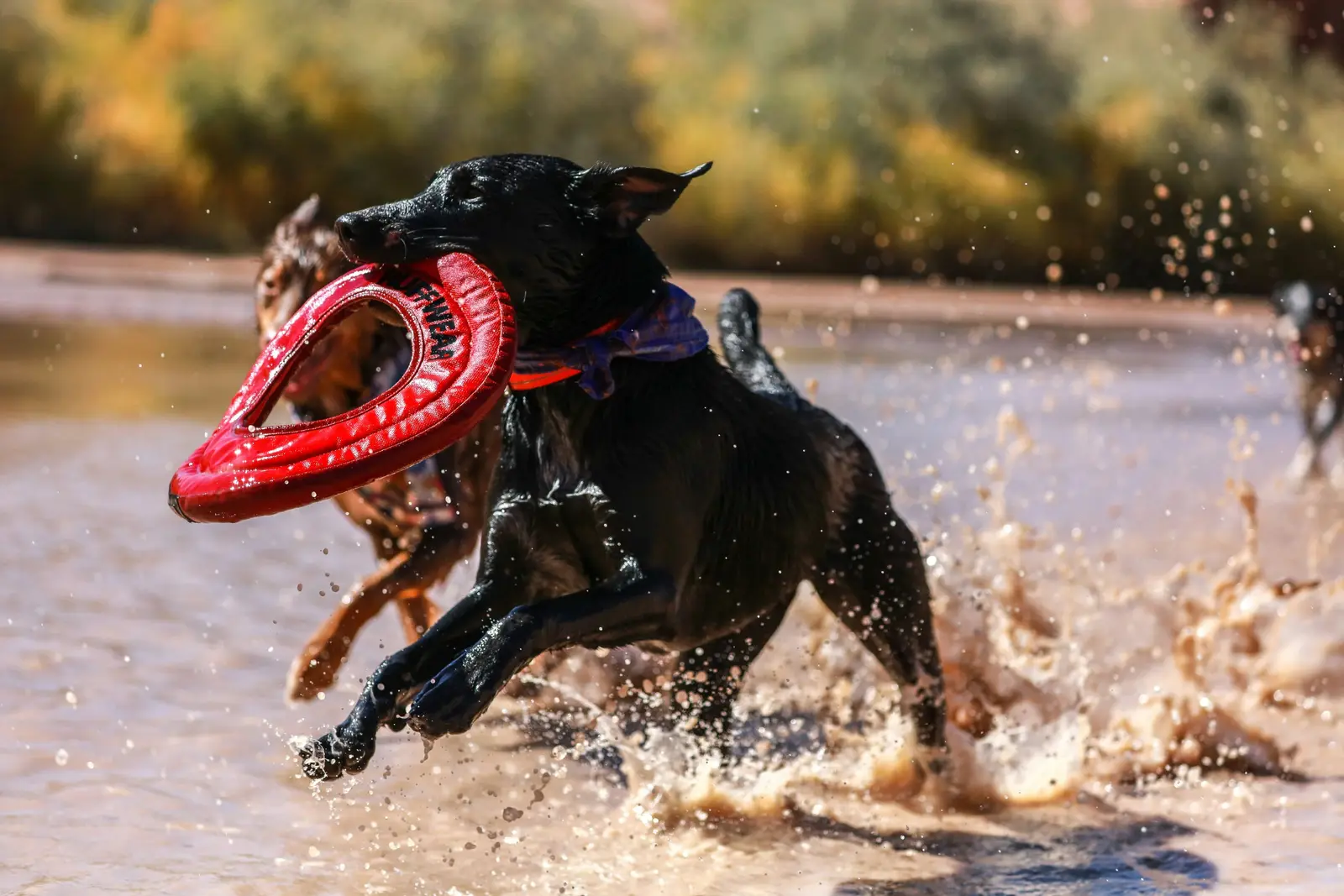
A dog stuck in mud in Hendersonville, Tennessee, was rescued by police officers, firefighters and Animal Control, who reached him from a kayak lent by a member of the public. His yelping near Imperial Boulevard and Sanders Ferry Road caught someone's attention. Officers from the Hendersonville Police Department arrived and tried to get to him, found the mud made that unsafe, and called the Hendersonville Fire Department.
The report doesn't name the dog or give his breed. It describes an animal who was frightened and trapped, in a spot that probably looked passable from the road and wasn't.
Firefighters joined the officers and the two crews worked out an approach together. The piece of equipment that made the difference came from a bystander, who offered a kayak to the rescuers. A kayak floats and spreads a person's weight, so a rescuer can get close without becoming the second thing stuck in the mud. Animal Control was part of the effort as well.
Why mud holds a dog so well
A dog in thick mud has nothing to push against. Paws sink past the point where they can take weight, and every attempt to climb out works him deeper. Panic does the rest. A struggling dog burns through his energy fast, and a tired dog stops being able to help himself, which is why these rescues so often need people with boats and ropes rather than a strong pair of arms.
The Hendersonville officers recognised the limits of what they could do on foot. They stopped trying an approach that wasn't working and brought in people with different equipment. That order of events is worth remembering, because the instinct when it's your own dog out there is to go straight in.
This kind of mud turns up in ordinary places: the edge of a retention pond, a riverbank after heavy rain, a tidal flat, a construction site, the strip where a stream crosses a field, a lake shore in late winter. It looks like wet ground from ten feet away and behaves like a trap up close.
If your dog is stuck in mud
The order below matters. Work down it rather than jumping to the last step, which is the one everyone wants to jump to.
- Stay on solid ground. Wading in is how one stuck animal becomes two, and the mud that swallowed him will not hold your weight either.
- Call for help early. Your fire department is the agency with water rescue gear and boats. Use 911 if a person or an animal is in immediate danger, and the non-emergency line otherwise. Say plainly that a dog is trapped and give the nearest address or intersection.
- Talk to him from the bank. His name, in a low steady voice, on repeat. Shouting raises the panic, and the panic is what tires him out.
- Use reach before you use weight. A leash, a long branch, a rope, a ladder laid flat on the surface. If you have a boat, a paddleboard or a kayak, use it the way the Hendersonville crews used the borrowed one.
- Get hold of a harness if he wears one. A collar loads the throat, and a struggling dog can be hurt by it or slip out of it. A second person on the bank takes the leash and shares the load.
- Carry him clear before you stop to check him over. A dog who shakes himself off on the edge can slide back in.
The first hour after a rescue
Mud on the coat is the least of it. The two things worth watching are what went into his mouth and nose, and how cold he got. Rinse his face and eyes with clean water. Don't push water or a cloth into his nose or ears. Dry him properly, including between the toes, under the chest and around the groin, then get him into a warm room.
Offer him a drink. Hold off on a large meal for an hour, and give him somewhere quiet to lie down.
Call your vet if he coughs, breathes noisily, vomits more than once, has diarrhoea, shivers and can't stop, or seems dull and won't settle. Mud carries bacteria, and a dog who has taken in muddy water can end up with a chest or gut problem that isn't obvious at first. Tell your vet how long he was stuck and whether he was struggling hard; the office can usually say over the phone whether he needs to be seen. I'm not a vet, and this is where the article stops and yours starts.
Cleaning up after a muddy dog
Hose him down outside before he comes in, and work the mud out of the undercoat with your fingers while it's still wet. Shampoo and rinse a second time, because the first rinse mostly moves dirt around. Then dry him fully, since a wet dog in a cold garage loses heat fast. The same rules that stop sand at the door work on mud: a towel by the door, a mat that traps grit, and a wash before he goes any further into the house.
Keeping him out of the mud next time
Test the ground yourself before you let him off lead near water, especially in the days after rain and through winter, when a bank that held last month may not hold now. A long line is the practical answer near wetlands and tidal flats. He still gets to sniff, and you keep a hold of him.
Puppies and older dogs are the two I'd keep closest. A puppy has no idea that a pond edge gives way, and an older dog with stiff hips or failing eyesight can't climb out of something a younger dog would manage.
If your dog launches himself at every patch of water he sees, the mud is a symptom of a recall problem. Reward-based recall work on dry ground is what keeps him out of the next one.
Common questions
- Can a dog sink in mud?
- Yes. Thick mud gives no footing, and once a dog stops moving it can hold him by the legs or belly. A struggling dog works himself deeper and tires fast. Stay on solid ground and call for help rather than going in after him.
- Should I call 911 for a dog stuck in mud?
- Use 911 if the dog is in immediate danger and no one is already handling it. Otherwise call your fire department's non-emergency line and say a dog is trapped and where. Towns route animal rescues differently, so be specific about the location.
- Can I pull my dog out by the collar?
- Don't. A collar puts all the strain on the throat, and a struggling dog can be hurt or slip free. Get hold of a harness or his body instead, with a second person on the bank taking the leash to share the load.
- Is it bad if my dog eats mud?
- A mouthful usually does no harm. A dog who has swallowed a lot can vomit or get diarrhoea, and mud carries bacteria. Call your vet if he vomits more than once, seems dull, or starts coughing, which can mean mud went down the wrong way.
- How do I get mud out of a dog's coat?
- Rinse with a hose before it dries, work it out of the undercoat with your fingers, then shampoo and rinse again. Dry him fully and keep him warm. Dogs with thick or matted coats often need a groomer to finish the job.
Sources
You might also like

Natural dewormer for dogs: 3 questions to ask before buying
Herbal wormers and kitchen remedies are sold as a natural fix for worms in dogs. None of them replaces a stool test, and one common remedy, garlic, is toxic to dogs.
Bugsy Malone rabbit: what the 6-month-old crossbreed needs
Bugsy Malone is a 6-month-old crossbreed rabbit at Blue Cross's Burford centre who needs a neutered female companion and an owner who has bonded rabbits before. His profile, explained.
5 ways to show your dog respect, starting with the walk
Five everyday habits that give your dog a say: real choices, sniffing walks, space, a warning before you touch, and one bed nobody disturbs. Plus where respect stops and the vet starts.